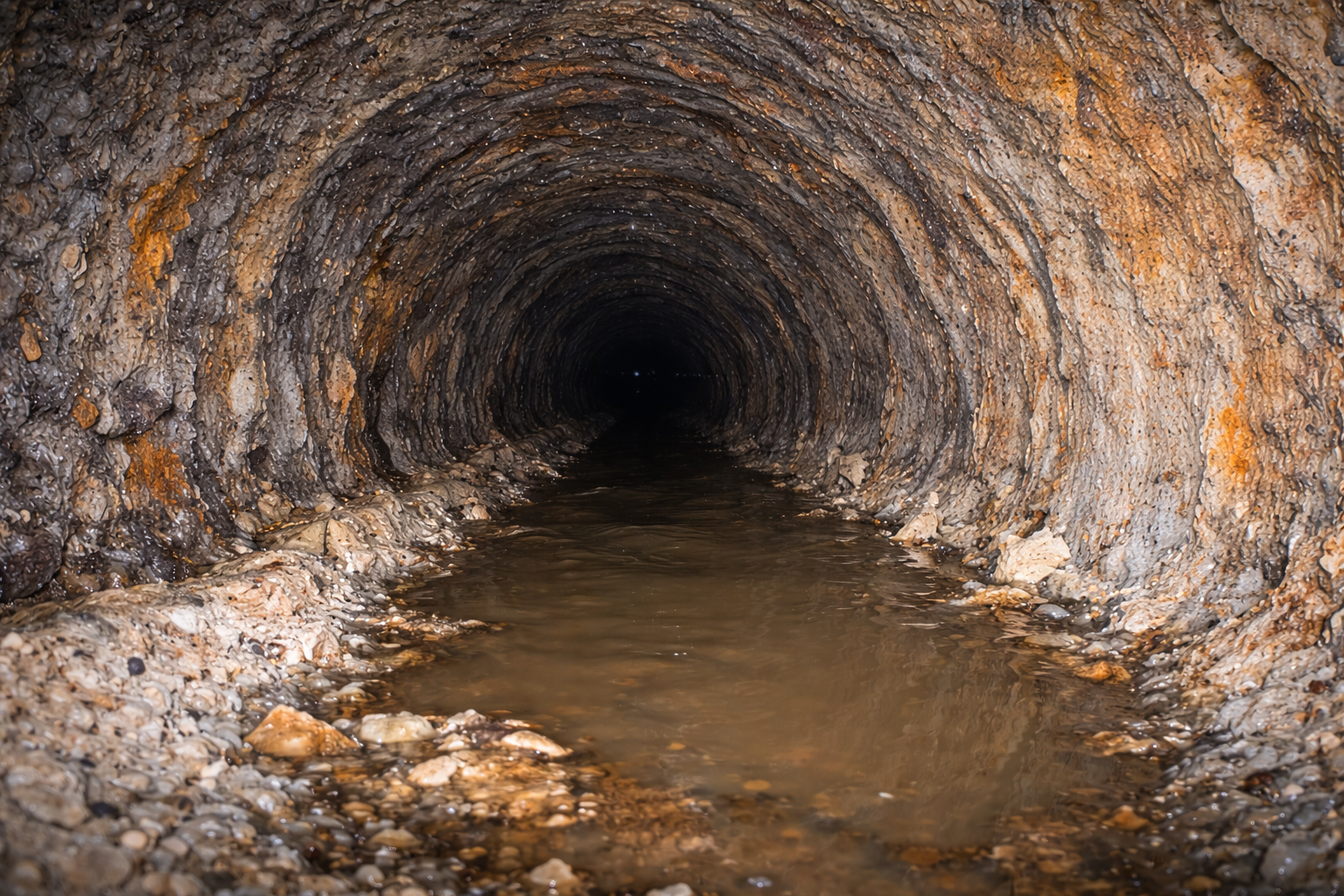
Standing Water in a Sewer Line: Belly, Low Spot, or Temporary Blockage?
Standing water in a sewer line can mean different things. It might indicate a belly or low spot. It might reflect debris or a temporary blockage. It can also appear alongside other defects that matter more than the water itself.
Why one screenshot is not enough
Homeowners sometimes see a still frame or hear “there is standing water in the line” and assume the meaning is obvious. It usually is not. The context of the full camera run matters: how much water is present, whether solids are moving, whether the pipe reappears correctly afterward, and whether there are other issues in the same area.
Belly or low spot
The pipe may sag and hold water on an ongoing basis.
Debris-related hold up
A partial blockage can create pooled water that is not truly a structural belly.
Bigger problem
Standing water may be one symptom within a line that also has roots, offsets, or breakage.
What a better inspection tells you
A full camera inspection with written notes helps define whether the water appears isolated, chronic, flow-restricting, or tied to larger defects. That is what makes the difference between “watch it,” “maintain it,” and “plan corrective work.”
For related reading, see What is a sewer belly? and Do I need to replace a sewer line with a belly?.
Related sewer resources
Before buying a home?
See why many buyers scope the line before closing.
Need an independent second opinion?
Avoid making a five-figure decision on pressure alone.
Concerned about repair cost?
Understand what actually drives replacement pricing.
Bottom line
Standing water should be interpreted in context, not treated like a complete answer by itself.
Need an independent sewer camera inspection in the Kansas City area? Schedule online or review our main sewer camera inspection page for service details, pricing, and coverage areas.
Visual Reference
GroundTruth uses documented inspection visuals and field-based findings to explain what may be happening and what to inspect next.