Know what is below before you dig, drill, cut, core, trench, or excavate.
GroundTruth provides Ground Penetrating Radar (GPR), private utility locating, concrete scanning, and pre-project subsurface investigation across the Kansas City metro. No repairs. No excavation upsell. Just clear field insight and documentation.
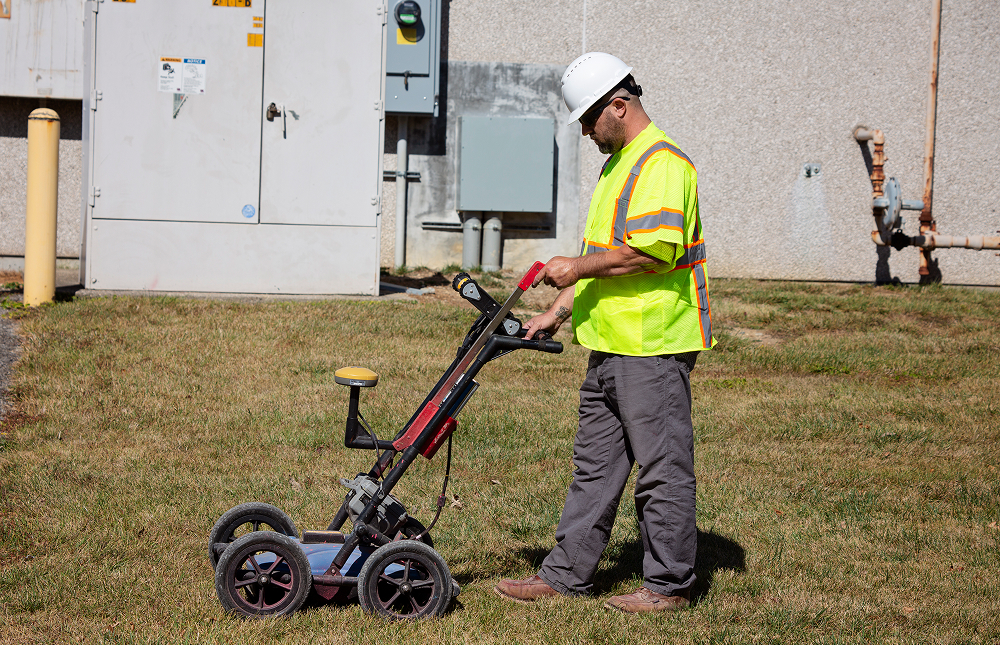
Best fit for jobs where guessing is expensive.
Includes up to 2 hours of on-site GPR investigation. Additional investigation time is $300/hour with prior approval. Send the job scope, address/city, and what you are trying to locate so we can confirm fit before arrival.
Know where the risk is before work starts, not after you hit it.
Reduce surprises before crews are already on site and waiting.
No repair sales attached to the findings. Just documentation and field insight.
Use the report and field notes with your contractor, engineer, buyer, or project team.
What you receive
A GPR or private locate visit should leave you with more than a quick opinion. GroundTruth gives you field insight you can use with your contractor, project manager, buyer team, or engineer.
Surface markings where appropriate and feasible based on access, target type, and site conditions.
Clear notes about likely findings, limitations, and what was investigated during the visit.
Inspection-only recommendations you can share before cutting, coring, trenching, drilling, or excavating.
GPR and private locating for higher-risk projects
GPR is useful when you need more confidence before cutting, coring, drilling, trenching, excavation, foundation work, utility work, renovation, or property investigation. It helps identify likely targets and risk areas that are not visible from the surface.
Request a GPR quote
Send the job address or city, what you are trying to locate, what work is planned, and the preferred date. We will review the scope and follow up with next steps.
Why GPR matters before work starts
GPR is not just another add-on service. It is a way to lower risk before demolition, concrete work, excavation, utility work, or expensive repair decisions begin.
One strike can cost thousands
Cutting a post-tension cable, drilling into hidden reinforcement, or hitting an unmarked private utility can stop a project immediately. GPR helps reduce that risk before work starts.
811 is not the whole picture
811 is critical for public utilities, but private lines, interior slab conditions, and site-specific unknowns often require additional investigation. That is where private locating and GPR can help.
When to use GPR
- Before cutting, coring, anchoring, or drilling into concrete
- Before trenching, digging, excavation, or boring work begins
- When private utility paths are uncertain
- Before excavation near structures, patios, driveways, slabs, or additions
- When you need to investigate unknown buried or embedded objects
- When a standard locate or camera locate alone is not enough
For some jobs, standard locating or camera-based mapping may be the best first step. For others, GPR adds the extra layer of insight you need.
What is included
- Up to 2 hours of on-site GPR investigation for the base service
- Surface marking where appropriate and feasible
- Discussion of likely findings, limitations, and next steps
- Inspection-only service with no excavation or repair sales pressure
Common GPR requests
Concrete scanning
Before coring, saw cutting, anchoring, trenching, or drilling, GPR can help identify likely reinforcement patterns, embedded lines, and hidden hazards under the slab.
Private utility locating
Useful when private-side utility paths are uncertain or when you need more confidence before excavation, renovation, rerouting, or project work.
Pre-project investigation
Helpful for homeowners, buyers, contractors, property managers, and commercial teams who need answers before committing to higher-cost work.
Camera locating vs. GPR
Choose pipe mapping when
- A cleanout or accessible line entry is available
- You need sewer lateral routing tied to camera footage
- You want a fast locate for accessible underground piping
Choose GPR when
- The target may be under concrete, a slab, or finished surfaces
- You are cutting, coring, drilling, trenching, digging, or demolishing
- You need broader subsurface intelligence before work begins
Ground Penetrating Radar service areas
Start with the main GPR page or jump directly to your city.
Frequently asked questions
What is Ground Penetrating Radar (GPR)?
GPR is a non-destructive scanning method used to identify likely buried utilities, embedded objects, reinforcement patterns, and subsurface changes before drilling, coring, cutting, digging, or buying property.
Do I still need to call 811?
Yes. Public utilities should be marked before service. GPR is often used to answer private-side and site-specific questions beyond standard public utility marking.
Can you scan concrete before drilling or coring?
Yes. Concrete scanning is a core use case for this service before coring, drilling, anchoring, trenching, and saw cutting.
Can GPR guarantee that every object or utility will be found?
No. GPR is an investigative tool, not a guarantee. Soil conditions, depth, target material, congestion, surface access, and site conditions can affect results. We explain limitations and document findings so you can make better decisions.
Do you perform repairs or excavation?
No. GroundTruth is inspection-only. We document what we find so you can move forward with the contractor or specialist of your choice.
Need GPR, private locating, or concrete scanning?
Call now or send the project scope, address/city, photos/plans if available, and what work is planned. We will tell you whether GPR, pipe mapping, or another inspection approach is the better fit.